



The Michigan Department of Natural Resources announced it closed March 20 on a conservation easement with Lyme Timber for 73,000 acres of working forestland known as the Michigamme Highlands. The deal has been years in the making and required millions in grants.
“It is seldom that the opportunity to secure public recreational access and protect forest land at such a large, landscape level comes along,” said Scott Bowen, DNR director.
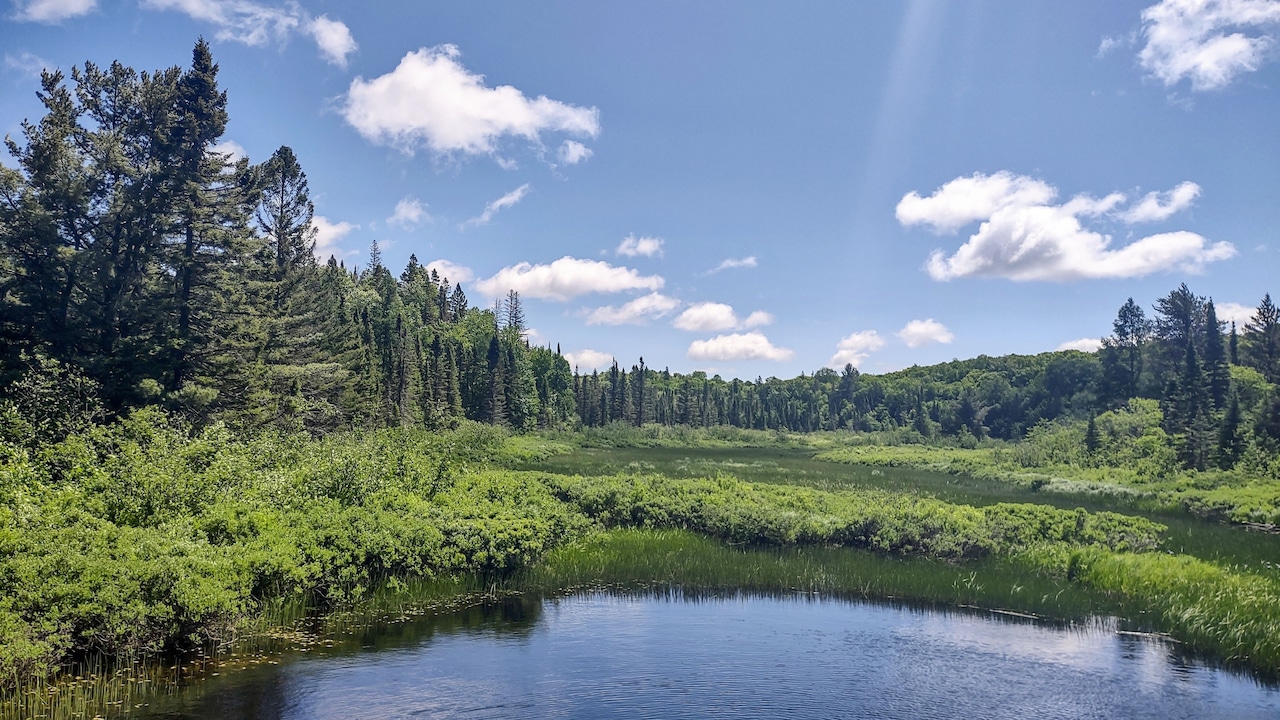
The timber company will continue to own and harvest the forested property, where dense boreal forest is considered critical to climate resiliency. The area near Lake Superior includes abundant wildlife habitat, high-quality brook trout streams and about 13,600 acres of wetlands used by Michigan’s reintroduced moose population.
Related: Two moose die as Michigan DNR expands U.P. collaring study to 56 animals
The nearly $20 million conservation easement will allow permanent public access.
Sarah Kitz, Lyme Timber’s managing director, said the project marks a major milestone for the company.
“The Michigamme Highlands conservation easement will leave a lasting legacy that benefits Michigan’s forests, the public, the regional forest products economy and the environment – at scale,” she said.
The vast acreage cannot be divided or developed, preventing fragmentation, and mineral rights have been severed, blocking future oil and gas exploration.
The project includes permanent public access to Mt. Arvon, Michigan’s highest elevation point. The land also adjoins the federal McCormick Wilderness Area in the Ottawa National Forest and Michigan’s Craig Lake State Park.
Officials say the working forest will continue to support the regional economy.
The conservation easement requires the timber company to harvest trees at sustainable levels to both support the forest products industry and maintain wildlife habitat and water quality. Officials estimate the logging work will generate about $4 million annually for Baraga, Iron and Marquette counties.
Wildlife in the Michigamme Highlands includes black bears, gray wolves, pine martens, fishers, grouse, eagles, hawks and owls. Thousands of acres of deer wintering habitat provide food and protective cover to support that game species through harsh U.P. winters.
Nearly two miles of the Yellow Dog River flows across the property, which also includes hundreds of miles of additional streams and rivers, along with nearly 100 lakes and ponds.
Related: Invasive purple jewelweed spreads through Upper Peninsula backyards, creeks
The public can use the Michigamme Highlands for recreation, including hunting, fishing, kayaking, hiking, and berry-picking. There also are designated mountain biking and horseback-riding trails, along with 70-plus miles of roads and trails for snowmobiling and off-road vehicle use.
“When we can protect critical deer wintering complexes, wildlife and fisheries habitat and help to secure sustainable forest management and support the forest products industry at the same time, as we have done with the Michigamme Highlands project, it is truly extraordinary,” Bowen said.
DNR officials worked over the past five years to secure grant funding for the conservation easement.
Funding included more than $15 million from the U.S. Forest Service’s Forest Legacy Program, $4.2 million from the Michigan Natural Resources Trust Fund and $1 million from the National Fish and Wildlife Foundation.
The DNR must conduct annual monitoring of the Michigamme Highlands, work that will be supported by the landowner and a stewardship endowment held by the Grand Traverse Regional Community Foundation.
