


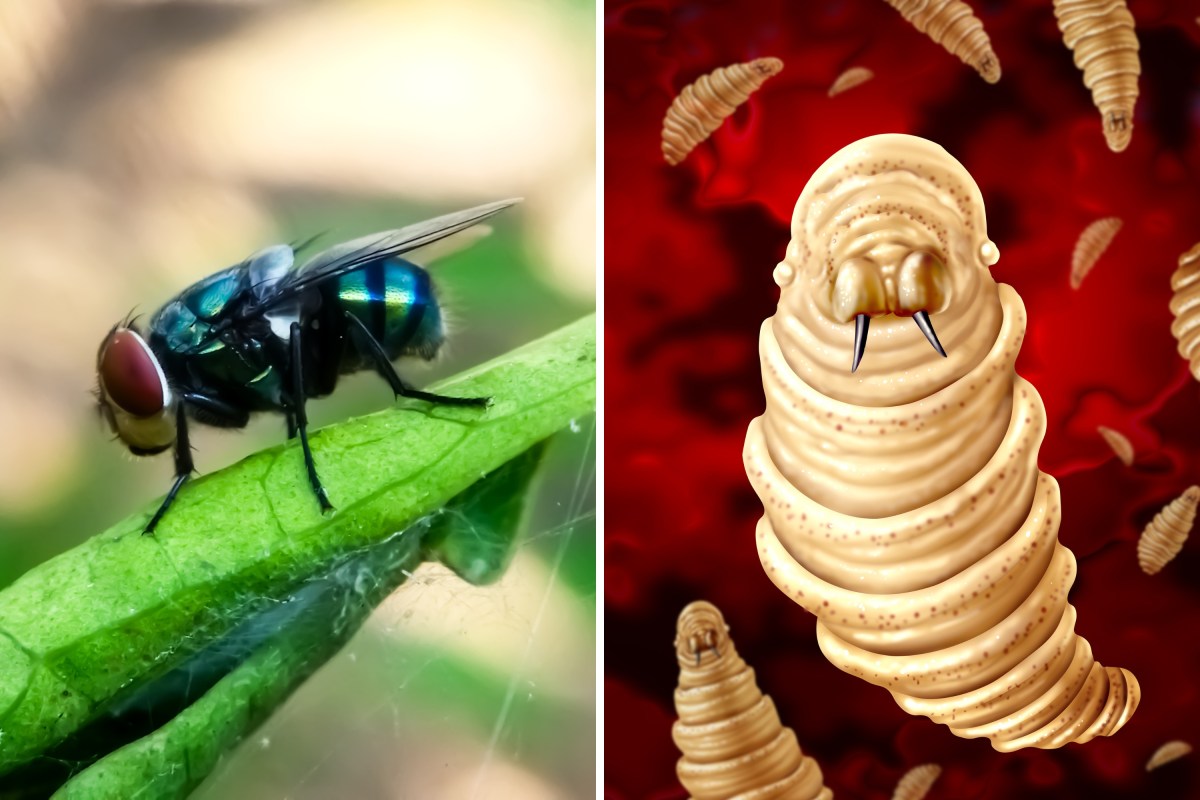

A flesh-eating parastic fly is inching back ever-closer to the United States border as funding for surveillance of the worm was withdrawn.
The New World screwworm (Cochliomyia hominivorax) is a parasitic fly that lays eggs in the open wounds and orifices of live animals, including humans.
Once hatched, the maggots eat the animal’s flesh, leaving further lesions and wounds, which can kill the host.
The New World screwworm had previously been eradicated within the U.S. in 1966, with just occasional but devastating incursions into the US, including in deer in 2016. But in recent years, cases have spiked in Central America.
The screwworm has now been confirmed across Mexico—including in two Mexican states, Tamaulipas and Nuevo Leon, which share a border with Texas.
According to biologist professor Richard Wall of the University of England, writing in the Conversation, there are several likely reasons for growing spread of screwworm: surveillance and prevention is expensive, and it comes at a time of U.S. federal budget cuts and reduced foreign aid that have weakened surveillance and impacted screwworm control programs in Central America.
The U.N.’s global health security program reduced its screwworm surveillance after U.S. funding was withdrawn in March 2025, however new federal funding for screwworm control has since been announced.
A report from the Animal and Plant Health Inspection Service at the U.S. Department of Agriculture (USDA) warns the screwworm is a
