



Introduction
Leptospira (family Leptospiraceae, order Spirochaetales) is a genus of spiral-shaped bacteria known to cause leptospirosis, a zoonotic disease of global significance. Humans acquire leptospirosis through contact with the urine of infected animals, or with environments such as soil or water that have been contaminated by infected urine [1]. In addition to entering the body through the mucous membranes of the mouth, nose, and eyes, Leptospira bacteria can also enter through cuts or abrasions on the skin [2]. Clinical manifestations of Leptospira infections in humans can range from flu-like symptoms to organ failure and even death causing around 60,000 fatalities and an average of one million infections globally each year [1,3].
Leptospirosis causes annual outbreaks in Sri Lanka associated with the two monsoon seasons followed by floods [4]. It was declared a notifiable disease in 1991 [3]. The estimated case fatality rate of leptospirosis was reported to be 7% in a study conducted in Sri Lanka from 2008 to 2015 [4]. The 2008 leptospirosis outbreak in Sri Lanka, which resulted in over 7,400 suspected cases and more than 200 deaths, prompted increased focus on improving diagnosis, surveillance, and understanding of potential reservoirs to better manage the disease. [5].
While rodents are well-recognized primary reservoir hosts of Leptospira, increasing evidence suggests that bats may also play a role in transmission [6]. Globally, bats have been identified as hosts for multiple Leptospira species using both immunological and molecular methods, including L. interrogans, L. borgpetersenii, L. kirschneri, L. fainei, and L. noguchii, with infections reported in over 107 bat species across different continents [6–10]. Notably, one case from the USA reported a human contracting leptospirosis after contact with a dead bat in a swimming pool, suggesting a potential risk associated with bat exposure [11]. This example illustrates that both direct and indirect contact with bats may represent potential routes of leptospirosis exposure.
In Sri Lanka, previous studies have identified several Leptospira serovars in livestock, wild and domestic animals, such as cattle, cats, dogs, pigs, goats, elephants, shrews, rats and mice [12–17]. Sri Lankan bats are known to carry bacteria such as Salmonella and various viruses [7–9,18–22]. However, the presence and genetic characteristics of Leptospira in Sri Lankan bats have not been previously documented. Thus, the aim of this study was to identify and characterize Leptospira species in bats from Wavulgalge cave, Sri Lanka.
Materials and methods
Ethics statement
The study followed ethical guidelines, with permits from the Department of Wildlife Conservation, Sri Lanka (permit No. WL/3/2/05/18), and ethical clearance from the Institute of Biology, Sri Lanka (ERC IOBSL 170 01 18). Bat handling was conducted following the guidelines of the American Society of Mammalogists. Each bat was carefully captured using hand nets, restrained manually with gloves, and sampled swiftly to minimize stress before being released at the site of capture [23]. Researchers received Pre-exposure rabies prophylaxis (PrEP) and wore personal protective equipment during sample collection to minimize zoonotic risks. The laboratory analyses of the collected samples were conducted following the BSL-2 conditions at the Robert Koch Institute, Berlin, Germany, adhering to strict safety protocols to minimize any potential risks associated with handling biological materials.
Sampling location
The study was conducted at Wavulgalge cave, a natural cave located in Koslanda, Monaragala district, Sri Lanka (6°43′37.1676″N, 81°3′11.7216″E) (S1 Fig).
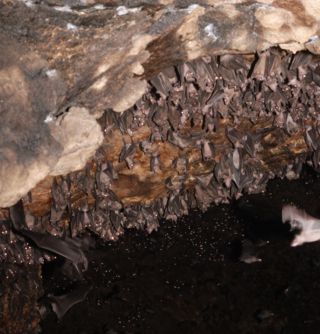
The cave is situated in a rural area, with a few scattered households and an extensive rice cultivation area located within 200 meters. The nearest village comprises dispersed households aligned along the main road, extending up to approximately one kilometer from the cave. One of the bat species occupying the cave, M. fuliginosus, is known to travel long distances between seasonal roosting sites, with some individuals flying over 200 km [24]. This site was selected due to its significance as one of Sri Lanka’s largest sympatric bat roosts, housing diverse bat species coexisting in a sympatric colony. Fig 1 shows the interior of the Wavulgalge cave.
Sampling period
Bats were sampled in March and July 2018, and January 2019, captured with hand nets during their foraging emergence, and subsequently documented for age, gender, and forearm length. Age groups were categorized into juvenile, sub-adult, and adult, with sexual dimorphism used to identify gender.
Biological sample collection
Urine samples were collected with CleanFoam swabs, from four bat species- M. fuliginosus, H. speoris, R. leschenaultii, and R. rouxii —upon natural urination, as previously described [23]. Samples were stored in 2 ml microtubes, and transported in va-Q-tec cooling boxes with -80°C cooling packs and a dry shipper VOYAGEUR containing absorbed liquid nitrogen, ensuring the cold chain was maintained throughout the journey.
Accurate host species identification
Prior to pathogen screening, bat host species were confirmed by molecular identification based on cytochrome b gene sequencing using primers RrFP (5′-TGRCATGAAAAAYCACCGTTG-3′) and RrRP (5′-CCCCTTTTCTGGTTTACAAGAC-3′), as previously described [25]. This step was performed to ensure accurate assignment of Leptospira-positive samples to the correct bat host species.
Detection of pathogenic Leptospira
Urine swabs were processed for nucleic acid extraction using the QIAamp Viral RNA Mini Kit (Qiagen, Hilden, Germany) according to the manufacturer’s instructions, omitting the DNase digestion step. Extracts were screened for pathogenic Leptospira using the CDC TaqMan real-time PCR assay targeting the lipL32 gene, which is conserved among pathogenic Leptospira species [26]. The qPCR was performed with primers lipL32_45F and lipL32_286R and probe lipL32_189P (S1 Table).
Each 25 µL qPCR reaction contained 12.5 µL TaqMan Universal PCR Master Mix (Applied Biosystems, USA), 0.9 µL each of 10 µM lipL32_45F and lipL32_286R primers, 0.25 µL of 10 µM FAM-labeled probe lipL32_189P, 5 µL of template DNA, and PCR-grade water to volume. Amplification was performed on a Bio-Rad CFX96 Touch Real-Time PCR system (Bio-Rad, USA) with an initial denaturation at 95°C for 10 min, followed by 45 cycles of 95°C for 15 s and 60°C for 60 s. Each run included DNA from Leptospira interrogans serovar Copenhageni (strain L-01) as a positive control, a negative extraction control, and a no-template control (PCR-grade water).
Generation of longer lipL32 amplicons for sequencing
To obtain a longer lipL32 fragment suitable for sequencing and GenBank submission, samples positive in the lipL32 screening qPCR were subjected to conventional PCR using primer lipL32_45F and a newly designed reverse primer lipL32_659R (614 bp amplicon). The lipL32_659R primer was used only for conventional PCR and sequencing; it was not used for real-time detection and was not run with the TaqMan probe. In-silico analysis indicated broad target compatibility of the lipL32_659R primer across pathogenic Leptospira species (S2 Table).
Conventional PCR was performed using HotStar Platinum Taq DNA Polymerase (Invitrogen/Thermo Fisher Scientific, USA). Each 22 µL reaction contained 2.5 µL of the manufacturer-supplied 10 × PCR buffer, 1.0 µL 50 mM MgCl₂, 1.0 µL 2.5 mM dNTP mix, 0.2 µL HotStar Platinum Taq DNA Polymerase (5 U/µL), 0.75 µL each of 10 µM forward and reverse primers, 3 µL template DNA, and PCR-grade water to volume. Cycling was performed on an Eppendorf Mastercycler Nexus (Eppendorf, Germany) with an initial activation/denaturation at 95°C for 5 min, followed by 40 cycles of 95°C for 15 s, 60°C for 45 s, and 72°C for 30 s, with a final extension at 72°C for 5 min. Amplicons were visualized on 1.5% agarose gels stained with Serva DNA Stain (SERVA Electrophoresis GmbH, Germany).
Amplification of additional loci for phylogenetic characterization
Leptospira-positive samples were further characterized by conventional PCR amplification of flaB, secY, and rrs2 loci using published primers and conditions [27,28] (S1 Table). Reactions were prepared using HotStar Platinum Taq DNA Polymerase as described above. Cycling conditions were 95°C for 5 min; 40 cycles of 95°C for 15 s and 60°C for 45 s; and 72°C for 5 min final extension. PCR products were visualized on 1.5% agarose gels.
PCR product purification and Sanger sequencing
Each PCR products from different genes were purified using MSB Spin PCRapace purification kit (STRATEC, Birkenfeld, Germany).Purified PCR products were sequenced using the Sanger sequencing method. The amplicons were sequenced in both directions using the Big Dye Terminator cycle sequencing Kit (Applied Biosystems, Foster City, USA). For sequencing of all target genes, including lipL32, flaB, secY, and rrs2, 1 µl of the purified PCR product was added to the Sanger sequencing master mix containing 3 µl of PCR water 1.5 µl of 5 × Sequencing buffer, 2 µl of BigDye 3.1 and 0.5 µl of 10µM gene-specific forward or reverse primers. The thermal cycling conditions were as follows: initial denaturation at 96°C for 2 minutes, followed by 25 cycles of denaturation at 96°C for 10 seconds, annealing at 55°C for 5 seconds, and extension at 60°C for 4 minutes. Sequencing was performed using the Applied Biosystems 3500 Dx Genetic Analyzer, by the MF2 sequencing laboratory at Robert Koch Institute, Germany. Sequence assembly and downstream analyses are described below.
Phylogenetic analysis of the sequences
Sequences were analyzed using Geneious Prime 2023.1.2 and MEGA11 software [29]. Four loci (lipL32, secY, flaB, and rrs2) were processed separately prior to concatenation. For each locus, sequences were aligned using the MAFFT algorithm, and alignments were manually inspected to confirm positional homology [30].
To assess potential topological conflicts, Bayesian phylogenetic trees for each locus were inferred independently in MrBayes v3.2 under the GTR + G substitution model, with two independent runs of four chains for 1,000,000 generations, sampling every 200 generations and discarding the first 10% as burn-in. No strongly supported incongruence was detected among loci; therefore, alignments were concatenated into a single dataset.
The concatenated dataset was analyzed in MrBayes v3.2 using the same settings described above. Reference sequences representing all 20 currently recognized species within the pathogenic (P1) Leptospira clade were included to ensure accurate phylogenetic placement and taxonomic identification. Leptonema illini was used as the outgroup to root the trees. Posterior probabilities (PP) were used to assess node support.
Discussion
This study provides the first molecular evidence of pathogenic Leptospira species in bat populations in Sri Lanka, specifically identifying L. borgpetersenii in M. fuliginosus bats. These findings expand our understanding of the sylvatic cycle of leptospirosis in the country and suggest that bats may act as potential reservoirs.
We detected Leptospira DNA in 11.97% (14/117) of M. fuliginosus bats sampled from Wavulgalge Cave. Notably, this cave serves as a pre-maternity roost for these bats, where pregnant females from nearby caves aggregate seasonally. The seasonal congregation of bats may enhance microbial transmission within colonies and facilitate environmental contamination, especially during the breeding season [31]. Moreover, Leptospira species have been detected in bat populations inhabiting diverse ecological niches worldwide, including caves and forest edges [32,33]. Wavulgalge Cave, with its stable microclimate and consistently high humidity, likely offers a suitable habitat for the persistence and potential transmission of Leptospira spp.
In our study, the highest number of positive detections was recorded in July, aligning with both the southwestern monsoon season and the peak of our sampling efforts. While this temporal overlap may suggest increased bacterial shedding during wetter months, it is important to note that Leptospira can persist in the renal tubules of infected bats and be shed intermittently, independent of external environmental conditions [4,34]. Given the limited sample size and the study’s confinement to a single site, firm conclusions regarding seasonal shedding patterns cannot be established.
The strong monophyly and high posterior probability inferred from the phylogenetic reconstruction suggest a relatively conserved L. borgpetersenii lineage circulating among Sri Lankan Miniopterus populations. The close phylogenetic relationship of the Miniopterus-derived sequence (L. borgpetersenii U240) with a Malagasy L. borgpetersenii isolate, also from Miniopterus bats, is noteworthy and may reflect a long-term host–pathogen association [35,36].
The basal placement of the Rousettus bat isolate (U289) within the pathogenic Leptospira clade raises the possibility of a currently uncharacterized pathogenic lineage in Sri Lanka. This finding warrants further investigation, including whole-genome sequencing, to determine its taxonomic status.
Interestingly, L. borgpetersenii U240 clustered with a sister clade containing L. borgpetersenii isolates from several human hosts and a house shrew species in Sri Lanka, demonstrating the close genetic relationship of strains from different hosts in the region. This pattern suggests the possibility of cross-species transmission or exposure to a shared environmental reservoir, but it cannot distinguish between these scenarios without additional epidemiological and ecological data. However, given the limited sample size and geographic scope of the present study, the extent of host associations and interspecies transmission dynamics in Sri Lankan bats remains uncertain.
In Sri Lanka, bat guano from Wavulgalge Cave is frequently collected for agricultural use, posing a potential risk of environmental dissemination of Leptospira through direct handling. Although numerous studies have demonstrated that Leptospira can persist in bats and be shed through urine in moist environments, the role of bat guano as a transmission medium remains poorly understood [37–39]. Nearby water bodies may also be at risk of contamination through bat urination, either directly or via surface runoff during rain events. Moreover, water accumulation within the cave may facilitate the spread of Leptospira from bat excreta—including both urine and guano—into adjacent ecosystems. While this study did not assess the bacterial load or diversity of Leptospira in guano, such data are essential to elucidate its potential contribution to environmental dissemination and spillover risk. These possible transmission routes highlight the importance of further ecological research to evaluate the risk of Leptospira exposure to both human and animal populations.
These ecological routes of transmission need to be considered in the context of species-specific differences in environmental persistence of Leptospira. The persistence of pathogenic Leptospira in moist environments is species-dependent, reflecting differences in their ecological adaptations. L. borgpetersenii has undergone genome reduction, losing genes for environmental sensing and nutrient acquisition, making it less capable of surviving outside hosts compared to L. interrogans [40,41]. L. interrogans can regulate virulence genes in response to osmotic changes, a mechanism largely absent in L. borgpetersenii [42]. Consequently, L. borgpetersenii transmission is more host-dependent, often through contact with infected urine, while L. interrogans more readily exploits environmental routes [43,44]. Flood-associated outbreaks in China and Australia highlight how climatic events amplify risk, though survival in soil and water still depends on factors such as pH, temperature, and reservoir shedding [43,45]. In summary, L. borgpetersenii shows reduced environmental persistence, but its epidemiology remains shaped by host dynamics and environmental change.
This study does not provide evidence for direct bat-to-human transmission. Instead, it underscores the ecological complexity of Leptospira transmission dynamics. Previous studies have detected L. borgpetersenii in Sri Lankan humans and livestock, suggesting environmental exposure as a common pathway rather than transmission from a single reservoir species [46].
Additionally, we designed a new reverse primer (lipL32_659R) to be paired with lipL32_45F to generate a longer lipL32 amplicon for Sanger sequencing and phylogenetic analyses. This tool may be useful for future phylogenetic and molecular epidemiological studies, enabling amplification of longer region of the lipL32 gene.
In conclusion, this study provides the first molecular evidence of L. borgpetersenii in M. fuliginosus bats from Wavulgalge Cave, Sri Lanka, along with the detection of distinct Leptospira species in R. leschenaultii. These findings contribute to the growing body of knowledge on bat-associated Leptospira globally and highlight the potential role of bats as reservoirs within the leptospirosis transmission cycle in Sri Lanka. However, further research—especially bacterial isolation, whole-genome sequencing, and longitudinal surveillance across multiple hosts and environments—is essential to elucidate transmission pathways. Given the vital ecological roles of bats in pollination, seed dispersal, and insect control, conservation and disease surveillance must be integrated through a One Health approach.
