


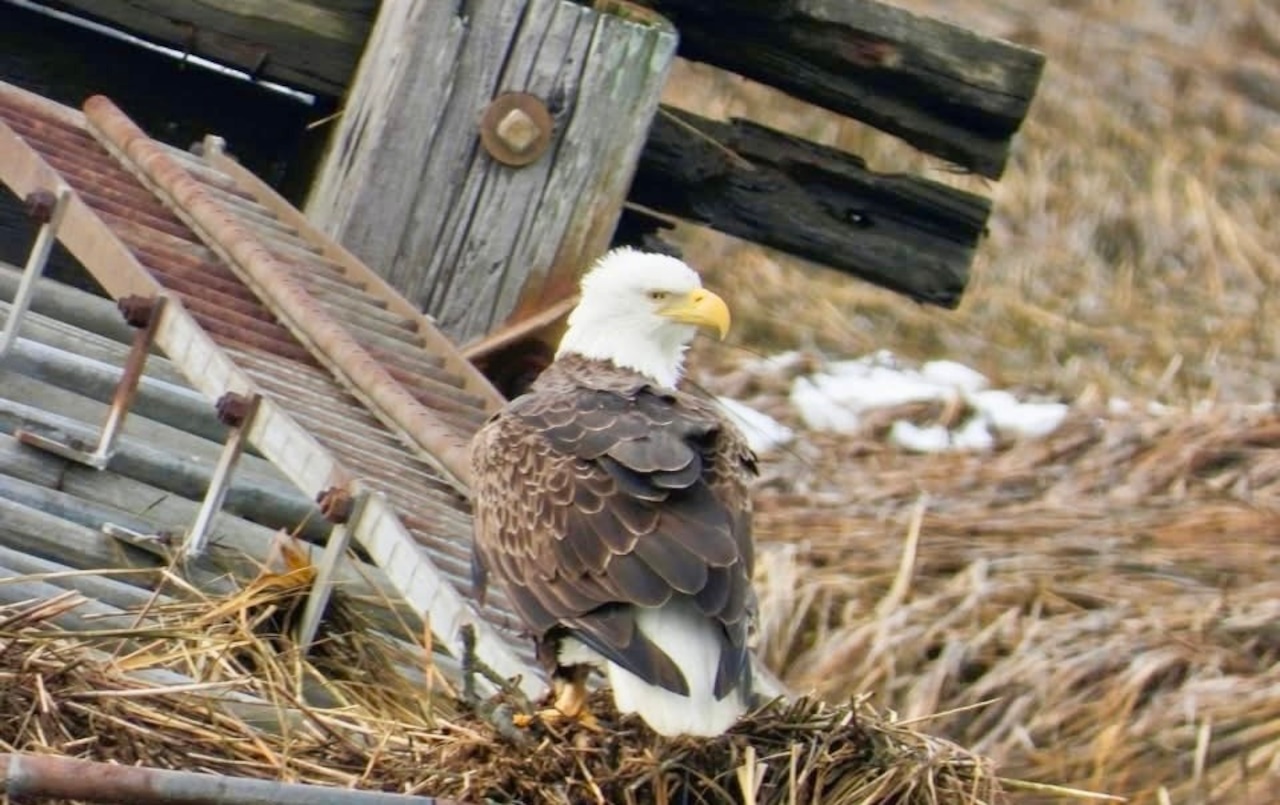

Like many Jersey Shore residents, Susan Crean and her husband are avid birdwatchers drawn to a bald eagle nest perched on a tower between Cape May and Wildwood Crest.
Eager to get out after this week’s historic blizzard, the couple drove to the nest Monday and discovered the tower had toppled in the storm.
Crean snapped a photo of one of the eagles perched on the fallen structure.
“I was horrified,” said Crean, 65, a retired Connecticut schoolteacher now living in Lower Township. “We just always look forward to seeing the babies.”
The nest was located about 100 yards from Ocean Drive, which runs over the Middle Thorofare Bridge.
Word of the tower’s collapse spread on social media after other passing motorists snapped photos of the fallen structure.
It was unclear whether similar towers in other areas of the state were destroyed during the storm.
Decades of conservation work led to bald eagles being removed from New Jersey’s endangered species list. The state’s efforts to revive its eagle population have been led by the Conserve Wildlife Foundation of New Jersey, a nonprofit that monitors nests statewide.
The wildlife foundation did not respond to an emailed request by NJ.com for comment.
Crean said she often passes the tower used in New Jersey’s eagle conservation, hoping to spot eaglets peeking from the nest’s brushy lining.
She now fears a pair of eagles was incubating eggs there when the tower crashed into the water.
Bald eagles nest earlier than other birds in New Jersey, laying eggs between February and mid-March, according to the wildlife foundation.
Volunteers regularly monitor nests during breeding season.
Decades ago, bald eagles in New Jersey became a rarity, with a single breeding pair in a remote area of Cumberland County. Conservationists tied the decreasing eagle numbers to the synthetic insecticide DDT, which was banned by the federal government in 1972.
Efforts to recover the population began in the 1980s, with eagles being reintroduced to New Jersey from Canada.
Artificial incubation and fostering efforts also began in earnest, and the population began to grow.
Bald eagles are also under federal protection, with their nests and roosting areas regulated by the U.S. Fish and Wildlife Service under the Bald and Golden Eagle Protection Act.
The federal government removed the bald eagle from its endangered species list in 2007.
“The last few weeks that I’ve been going, there’s always one (eagle) sitting,” Crean said. “When they’re sitting on the nest, generally, they’re sitting on eggs. It just broke my heart to see that the nest had been crushed.”
For years, the tower has been a roadside attraction for motorists passing over a small bridge near a marina used by Lund’s Fisheries and Bumble Bee Foods, she added.
“We regularly go over and visit the eagle nest because it’s fascinating to us,” Crean said. “We just love to see them, and it’s a whole process when they come back to the nest. We knew we were getting close to eggs being laid and babies being born.”
