


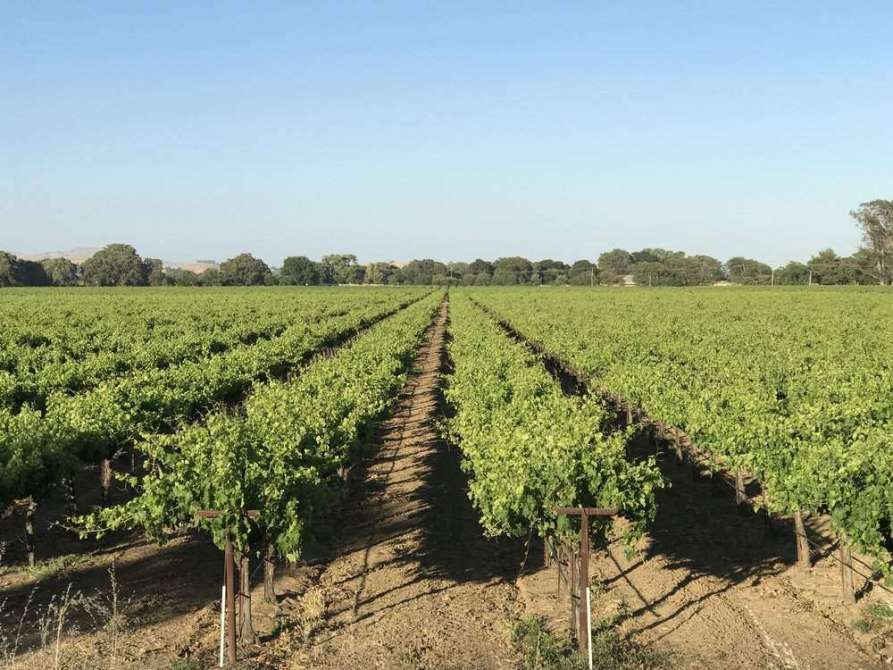

The Solano County Board of Supervisors heard an update on the status of the Solano County Strategic Initiative for Agriculture from Agricultural Commissioner Ed King and other staff on Tuesday. The program is funded by a planning grant from the Sustainable Agricultural Lands Conservation Program, according to staff.
Solano County created a steering committee for the project when it began, as well as two supporting committees on Food and Agriculture and Land Use and Infrastructure. The Land Use and Infrastructure committee includes representation from all cities in the county, all Resource Conservation Districts, Solano LAFCO, UC Cooperative Extension, and county staff.
The project has been underway for just over a year and has hosted four steering committee meetings, three Food and Agriculture meetings, two Land Use and Infrastructure meetings, and one joint committee meeting. Staff have also hosted “multiple robust and informative individual stakeholder meetings.”
Serena Unger, a Consultant with Urban Rural Regional Strategies, said the assessment will focus specifically on land use and supporting interagency collaboration.
“The assessment provides a decision-making tool to help inform choices,” Unger said.
Unger said that the assessment serves as a “foundation for dialogue” on the issue and helps to balance growth with agricultural needs.
“Agriculture has a vital stake in how and where communities grow,” she said.
Unger said the county seeks to limit urban sprawl and curb the urbanization of agricultural land by developing a “farms under threat” mapping criteria and considering an expansion of the ag reserve overlay. The group will also review the efficacy of the Orderly Growth Initiative and will consider potential amendments and alternatives while balancing the county’s economic goals.
The initiative seeks to review the zoning ordinances and modernize them for the county, Unger said, as well as expand the use of “agrovoltaics” in the county. Such solar panels are located in the same fields they power.
Unger also said the county is considering an inter-agency planning collaborative and is looking to partner with Solano LAFCO to “balance city growth, ag land preservation and economic development.”
“This means establishing an ongoing commitment between the cities, the county, and LAFCO,” Unger said.
Experts noted that Solano County can be a bridge for new agricultural technologies to reach the Bay Area and Central Valley after being developed at or around UC Davis.
Staff said they will report out one more time on the initiative at the end of 2026, coinciding with the end of the grant period on that issue. Staff hope to provide a variety of recommendations based on the findings of the initiative at that time.
Supervisor Wanda Williams thanked King and other staff for the information and expressed concerns for smaller farms in the county. Lisa Howard of the Suisun Valley Vinters and Growers Association spoke during public comment on the item to applaud staff for meeting with stakeholders.
“We are really well informed; we really feel like we are part of the process,” Howard said.
Duane Kromm of the Orderly Growth Committee said agriculture remains the key to the county’s identity if done correctly. He expressed frustration about the idea that the Orderly Growth Initiative has not done all that is possible to protect agricultural land. He said agrotourism in Suisun Valley is “off the charts” relative to expectations.
“Has anyone compared the rate of ag land lost in Solano to other comparable counties around the state and to national averages?” he asked.
Kromm said he would have liked to have seen a summit between stakeholders before the next general plan update, as previously discussed by the board.
“It seems like it has kind of fallen off of the table,” he said.
Water and Natural Resources Program Manager Misty Kaltreider presented to the board on the One Water Framework, which would serve as one cornerstone of a broader utilities masterplan. She said water is key to agriculture and other economic development in the unincorporated area.
Sachi Itagaki, a consultant, provided the presentation alongside Kaltreider and said that the One Water Framework can also support the county’s general plan update. The framework would consider all utility-scale water sources in the county and would include a steering committee with over two dozen stakeholders. Each city and water purveyor, multiple special districts, and all other agencies and entities important to the county have been included in eight steering committee and framework review meetings as the framework was constructed.”
The Framework recommends three multi-benefit conceptual projects, including a Waterway Maintenance and streamlined permitting project in Suisun Valley, Regional Coordination for Multi-Benefit Drainage and Groundwater Recharge in Dixon Ridge, and Water Supply and Wastewater Assessment Studies for Green Valley and Suisun Valley.
