



By William Thiele
Pennsylvania has a proud farming heritage, and the rolling hills of Butler County are no exception.
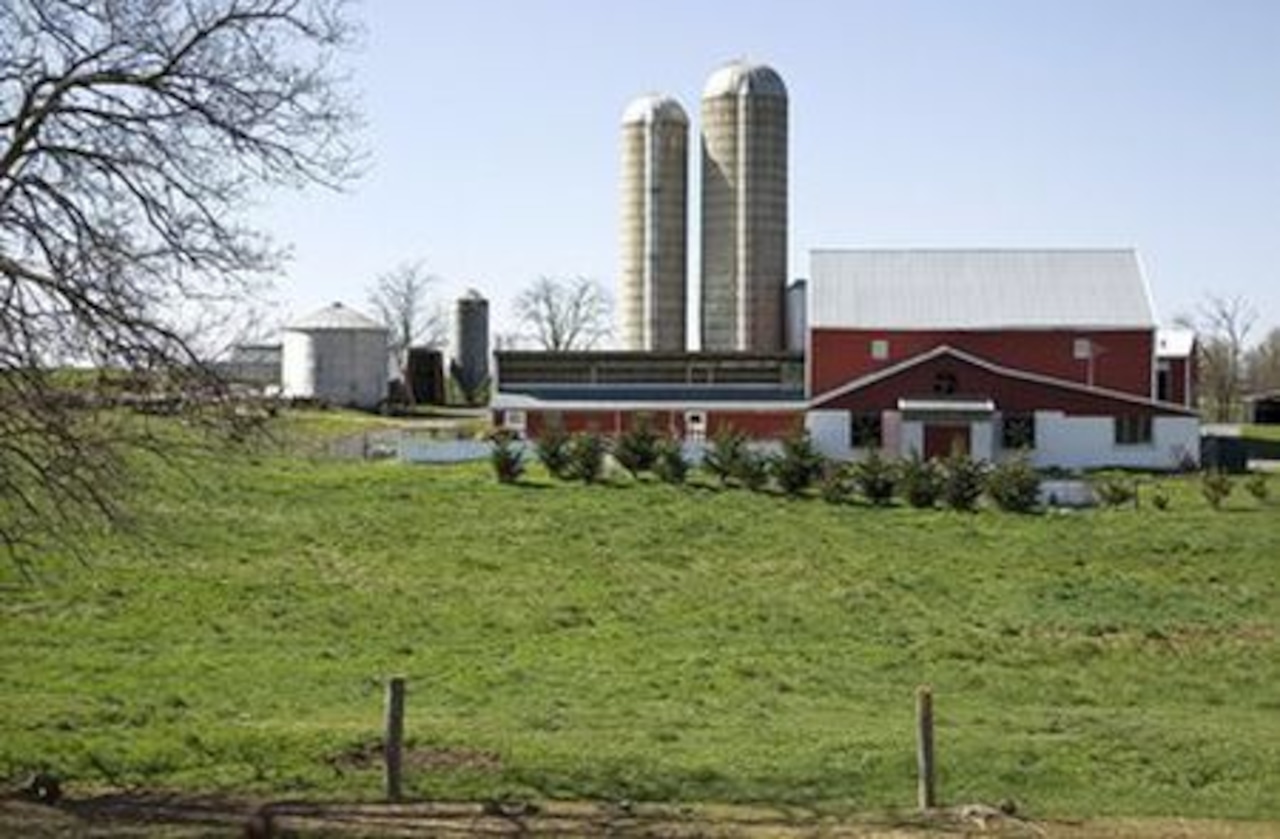
Our farm was founded in 1868 and has seen six generations of Thieles working the same ground. Today, alongside my brother and our parents, we milk about 40 cows and farm roughly 300 acres of corn, soybeans, oats, hay and cover crops.
Like many family farms, we operate on tight margins, a hard reality made tougher by high input costs for seed, fertilizer, labor and machinery, volatile prices for crops like corn and soybeans, and increasingly destructive weather.
When every decision matters and every dollar counts, you look for tools that really work. This is where conservation practices come in, which help farmers cut costs, boost productivity, and bolster resilience.
Given these clear benefits for farmers, I’m alarmed by the mixed signals coming out of Washington.
In the past year and thanks to House Agriculture Committee Chairman Glenn “G.T.” Thompson (R-Pa.), Congress locked in additional long-term funding for key programs that help farmers implement these practices. USDA, under the leadership of President Donald Trump and Agriculture Secretary Brooke Rollins, also announced a new $700 million Regenerative Agriculture Pilot Program to help farmers build soil health and cut input costs.
Those are big steps in the right direction.
But now I’m watching the same policymakers potentially allow the Natural Resources Conservation Service — the agency that actually delivers these programs — to lose nearly a quarter of its workforce and talk about moving important funding out of the Environmental Quality Incentives Program, or EQIP, to use for other purposes.
This isn’t just bad for Pennsylvania producers, it’s personal for me.
About a decade ago, our local NRCS office told us about EQIP, which would help cover the cost of planting cover crops. We had never done that before. Buying seed for something you don’t plan to harvest feels risky when you’re watching every expense. But NRCS gave us the confidence and support to give it a try.
We started simple — rye after soybeans — mainly to prevent erosion on some of our shale-heavy soils. Around here, I like to say we’ve got the “Heinz 57” of soil types. We have a little bit of everything, and not all of it is easy to farm.
What we saw convinced us to keep going. The cover crops held the soil in place. Over time, we saw better soil structure and resilience. We experimented with multispecies mixes, planting green in the spring, and incorporating practices like no-till that, frankly, some folks around here once considered “wacky.”
We even planted sunflowers as part of a summer mix. People driving by our farm couldn’t believe it. “You can’t grow sunflowers in western Pennsylvania,” they’d say. But they worked. Seeing this, some of my fellow farmers started asking me why we were doing what we were doing.
The answer is simple: Conservation practices help our bottom line. By reducing tillage, we save fuel, time and wear-and-tear on equipment. Healthier soils are more resilient in heavy rains and dry spells. That matters in a world where the weather feels more unpredictable every year.
I’m a conservative. I believe in personal responsibility and running a tight ship. Some people assume conservation is about politics or environmental ideology. On our farm, it’s about good business and good stewardship. If these practices didn’t make economic sense, we wouldn’t do them. Farmers don’t have that luxury.
That’s why federal conservation programs like EQIP and the Conservation Stewardship Program are so important. They are voluntary, locally led, and help farmers try new approaches without betting the farm on an unproven idea.
NRCS staff and funding were instrumental in getting us started. If not for that support, we might not have taken that first step. Over the years, they’ve helped us navigate programs, understand new opportunities and connect with other producers.
All this brings me back to the warning signs I mentioned earlier.
Conservation dollars don’t implement themselves. Precision agriculture upgrades, cover crop contracts, grazing plans and nutrient management systems all require technical assistance. Farmers need people on the ground — planners, engineers and soil specialists — to help design and implement these practices properly.
When staffing shrinks and funding uncertainty grows, programs and payments stall, contracts go unimplemented, and farmers are left carrying risk alone.
In short, you can’t grow conservation by cutting its roots.
Congress is currently debating a long-overdue Farm Bill and annual appropriations legislation. I appreciate that lawmakers on both sides of the aisle say they support conservation. Now we need them to follow through.
If our federal leaders are to make good on the promises they are making in Washington, they must protect funding and protect the workforce that delivers these dollars to producers.
On our operation, conservation has helped improve our soil, strengthen our resilience and even change how our neighbors view agriculture. People drive by and see flowers and cover crops instead of bare ground. They see farmers trying new ideas and investing in the future.
Conservation helps everybody. It helps farmers’ bottom lines. It helps our soil and water. For the sake of family farms like mine and for the next generation that hopes to farm this land, Congress and USDA must protect both conservation funding and the NRCS staffing needed to deliver it.
