


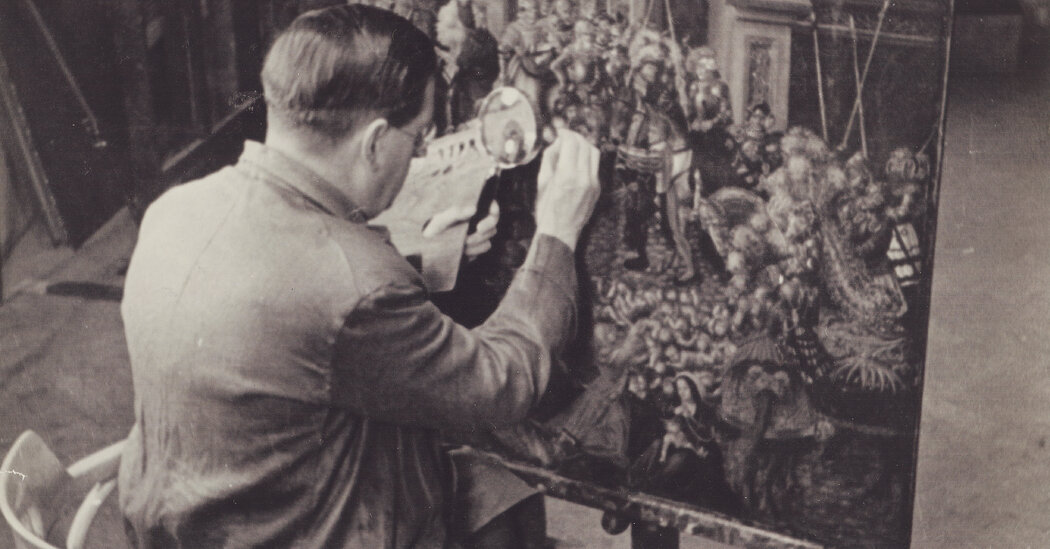

Bookbinders and restorers in the 1930s and ’40s used their craft to help the Nazi regime create a database that was used to persecute and kill Jews and others who were deemed racially impure, a British researcher has found.
Key to building this database were church, civil and synagogue records, which were often hundreds of years old and damaged beyond legibility when the Nazis came to power in 1933.
By tasking professionals with cleaning up these documents, which held information about millions of people, the Nazis gained access to generations’ worth of material — which they used to target specific population groups, the new research shows.
The findings are the result of more than two decades of work by Morwenna Blewett, an expert in conservation history.
She was working as a conservation fellow at the Worcester Art Museum in Massachusetts in 2004 when a question came to her: What had happened to the art restorers who did not flee Nazi Germany during World War II?
She pondered the question while sorting through an old filing cabinet in the museum’s basement — where, as she recalled in a book published this month, “Art Restoration Under the Nazi Regime: Revelation and Concealment,” the “warm, dark air smelt faintly of cigarettes, coffee and engine oil.”
Thank you for your patience while we verify access. If you are in Reader mode please exit and log into your Times account, or subscribe for all of The Times.
Thank you for your patience while we verify access.
Already a subscriber? Log in.
Want all of The Times? Subscribe.
