



To place an obituary, please include the information from the obituary checklist below in an email to obits@pioneerpress.com. There is no option to place them through our website at this time. Feel free to contact our obituary desk at 651-228-5263 with any questions.
General Information:
Your full name,
Address (City, State, Zip Code),
Phone number,
And an alternate phone number (if any)
Obituary Specification:
Name of Deceased,
Obituary Text,
A photo in a JPEG or PDF file is preferable, TIF and other files are accepted, we will contact you if there are any issues with the photo.
Ad Run dates
There is a discount for running more than one day, but this must be scheduled on the first run date to apply.
If a photo is used, it must be used for both days for the discount to apply, contact us for more information.
Policies:
Verification of Death:
In order to publish obituaries a name and phone number of funeral home/cremation society is required. We must contact the funeral home/cremation society handling the arrangements during their business hours to verify the death. If the body of the deceased has been donated to the University of Minnesota Anatomy Bequest Program, or a similar program, their phone number is required for verification.
Please allow enough time to contact them especially during their limited weekend hours.
A death certificate is also acceptable for this purpose but only one of these two options are necessary.
Guestbook and Outside Websites:
We are not allowed to reference other media sources with a guestbook or an obituary placed elsewhere when placing an obituary in print and online. We may place a website for a funeral home or a family email for contact instead; contact us with any questions regarding this matter.
Obituary Process:
Once your submission is completed, we will fax or email a proof for review prior to publication in the newspaper. This proof includes price and days the notice is scheduled to appear.
Please review the proof carefully. We must be notified of errors or changes before the notice appears in the Pioneer Press based on each day’s deadlines.
After publication, we will not be responsible for errors that may occur after final proofing.
Online:
Changes to an online obituary can be handled through the obituary desk. Call us with further questions.
Payment Procedure:
Pre-payment is required for all obituary notices prior to publication by the deadline specified below in our deadline schedule. Please call 651-228-5263 with your payment information after you have received the proof and approved its contents.
Credit Card: Payment accepted by phone only due to PCI (Payment Card Industry) regulations
EFT: Check by phone. Please provide your routing number and account number.
Rates:
The minimum charge is $162 for the first 12 lines.
Every line after the first 12 is $12.
If the ad is under 12 lines it will be charged the minimum rate of $162.
Obituaries including more than 40 lines will receive a 7.5% discount per line.
On a second run date, receive a 20% discount off both the first and second placement.
Place three obituaries and the third placement will be free of charge.
Each photo published is $125 per day. For example: 2 photos in the paper on 2 days would be 4 photo charges at $500.
Deadlines:
Please follow deadline times to ensure your obituary is published on the day requested.
Hours
Deadline (no exceptions)
Ad
Photos
MEMORIAM (NON-OBITUARY) REQUEST
Unlike an obituary, Memoriam submissions are remembrances of a loved one who has passed. The rates for a memoriam differ from obituaries.
Please call or email us for more memoriam information
Please call 651-228-5280 for more information.
HOURS: Monday – Friday 8:00AM – 5:00PM (CLOSED WEEKENDS and HOLIDAYS)
Please submit your memoriam ad to memoriams@pioneerpress.com or call 651-228-5280.
Medical experiments on research dogs could be phased out soon — a change that’s based as much on science as ethics. Pressure is coming from within the scientific community as well as from activists, following a string of scandals involving inhumane living conditions. It follows a similar phase-out in the last decade of the use of captive chimpanzees, which was driven by growing recognition of chimpanzee intelligence and the close evolutionary kinship between our species and theirs.
Two areas of science are precipitating change. Scientists are developing new types of human cell cultures and other alternatives that may mimic human disease at least as well as animals, while new research has revealed the depth of animal cognition and the richness of their emotional lives.
Scientists in government, universities, hospitals and private companies use thousands of dogs a year, often subjecting them to isolation, confinement in small, barren cages, and painful procedures. Some are force-fed high doses of pesticides, fungicides, or other hazardous chemicals.
Ethics should inform what scientists are permitted to do and how animals should be treated, but science informs our ethical guidelines.
A common argument in favor of animal research is historical: animals were used to develop insulin, organ transplantation and blood transfusions. That justification rests on an untestable assumption — that these discoveries could not have been made in other ways, even if progress would have been slower.
In an opinion column that ran earlier this year in the Washington Post, Jane Goodall and evolutionary biologist Marc Bekoff detailed the ways dogs suffer from the research itself, as well as from the isolation, boredom and confinement that accompany being a lab dog. This is no longer just a projection of the way we’d feel under those circumstances. A growing body of research has shown that being caged and isolated causes stress in dogs. Similar studies have revealed stress and self-harm among caged research monkeys.
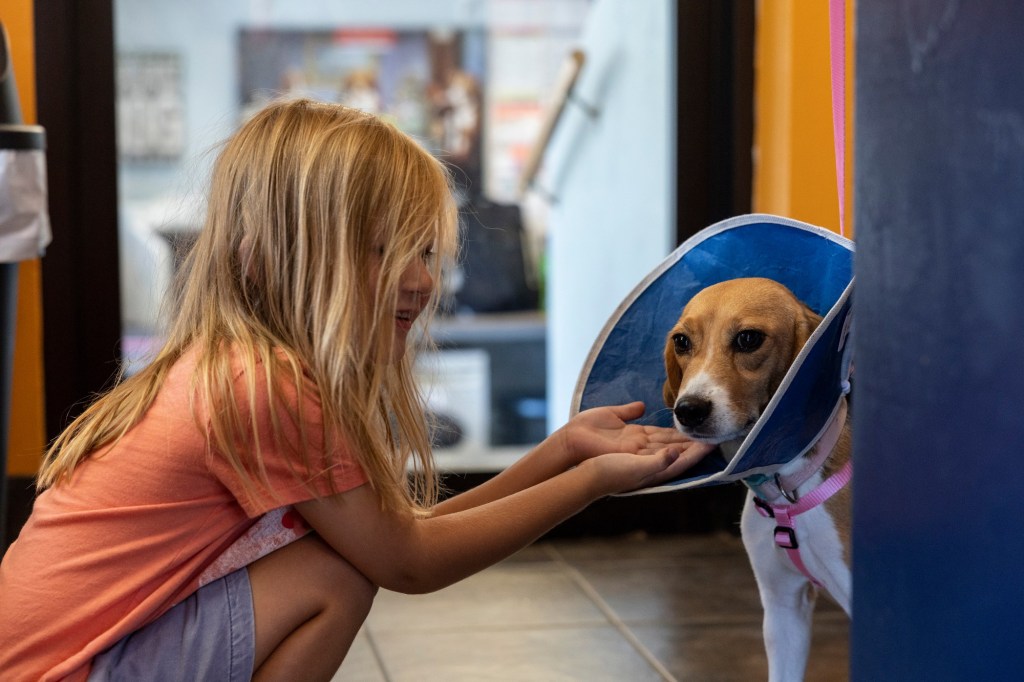
Bekoff and Goodall wrote that most research dogs are beagles, which are bred to be obedient and trusting. The scientists call this a “betrayal of man’s best friend.” The general public’s attitude is also shifting. A Gallup poll this year showed Americans split evenly on the morality of experimenting on any animal, with disapproval of animal research slowly increasing across the board.
One reason is growing visibility. In 2018, a panel assembled by the National Academies of Sciences, Engineering and Medicine reviewed dog research at four Veterans Administration facilities after activists released footage of apparent inhumane treatment. The panel was led by urologist, flight surgeon and Gulf War veteran Rhonda Cornum.
The 2020 report concluded that only a small number of dog experiments might still be necessary for certain research programs. The report also deemed justifications based on historical breakthroughs to represent “circular reasoning” since we don’t know what’s possible with other methods. The study also noted that some data relevant to human health can be obtained by enrolling sick dogs in clinical trials, which might benefit them.
Adding to the pressure to change the way dogs are treated were scandals exposing inhumane conditions at several industrial facilities that breed thousands of lab dogs. In 2021, USDA inspectors found 70 violations of the Animal Welfare Act at the major facility called Envigo in Cumberland, Virginia. The inspectors documented puppy deaths, untreated illness and injury, and dogs kept in cramped cages in extreme heat amid a stench of urine and feces. Under pressure, the facility shut down in 2022.
Another breeding facility, Ridglan Farms in Wisconsin, was the subject of a criminal investigation into inhumane conditions. In October, the owners agreed to stop supplying beagles for research as part of a settlement with federal authorities.
It’s still hard to get good data on the number of dogs used for different kinds of experiments — whether for basic science aimed at understanding physiology, medical research aimed at particular diseases, or toxicology to test chemicals. USDA data show more than 40,000 research dogs are used annually.
There’s also no scientific basis for the view that lab dogs are inherently different from pets, or that they were somehow not meant to be companion animals. People who’ve adopted the small fraction of lab beagles set free have found they’re just like any other dog. This reminded me of the science fiction novel “Never Let Me Go,” about human clones who serve as organ donors for “normal” people.
Today, some organizations opposing animal research have found allies on the political right, such as the White Coat Waste Project, which has highlighted numerous abuses. Support from both sides of the political divide could help create the impetus for real change. Researchers are actively developing human alternatives, including various configurations of human cells and tissues. But developing and testing those takes money.
Being pro-science doesn’t have to include a belief in progress at all costs. It can mean accepting — and being guided by — the findings of existing science, including what they tell us about our kinship with other animals.
F.D. Flam is a Bloomberg Opinion columnist covering science. She is host of the “Follow the Science” podcast.
