


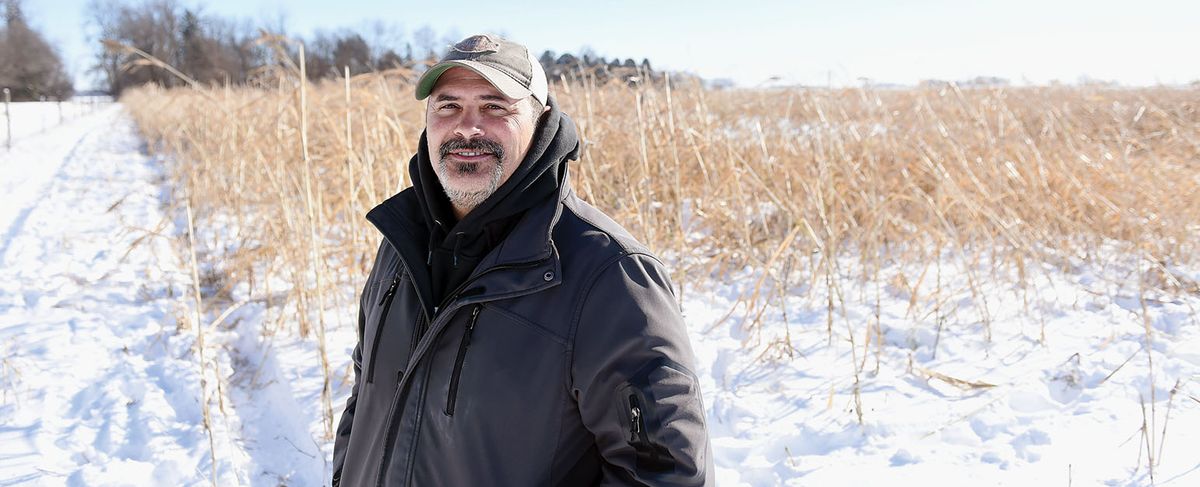

Since the late 1990s, Tom Cotter and his family have steadily adopted and advocated for soil conservation practices that can invigorate and maintain soil health.
This week it was announced that Cotter had once again been recognized for these efforts when he was honored with the Minnesota Leopold Conservation Award, which brought along with it a $10,000.
“Tom doesn’t just practice conservation, he builds community around it,” said. Dr. Liz Haney in a press release earlier this week. It was Haney who nominated Cotter for the award. “He lifts up others with his knowledge, humor and lived example. His work embodies Aldo Leopold’s land ethic and inspires the kind of stewardship this award was meant to honor.”
The Sand County Foundation and national sponsor American Farmland Trust present Leopold Conservation Awards to private landowners in 28 states. In Minnesota, the $10,000 prize is presented alongside state partners Minnesota Soil Health Coalition and Soil Regen.
The award given in Leopold’s name, recognizes landowners who inspire others with their dedication to environmental improvement. In his 1949 book, “A Sand County Almanac,” Leopold advocated for “a land ethic,” an ethical relationship between people and the land they own and manage.
Cotter has taken that idea to heart, adopting strategies that not only sustains the soil in the fields he owns, but regenerates soil health.
“It’s a complete system we’re doing here,” Cotter said Thursday morning from his family’s home explaining that he and others adopting the same types of strategies aren’t looking for recognition, but rather an opportunity to share what they know. “Teach other people how to do it.”
By 2015, Cotter had reduced tillage and began looking for farmers that were committed to the comprehensive approach to soil health and sustainable farming. In 2016, Cotter Farms was the first Mower County operation to be certified as a Minnesota Agricultural Water Quality Farm, which came from his implementation of conservation practices that exceeded regulatory requirements.
While Cotter has been known locally for his efforts, he’s also been able to start making a name for the work he and others are doing statewide. He’s adamant that it’s not a singular effort but an effort by a core group of farmers locally as well as a coalition of organizations that are helping get the word out.
In particular he pointed to groups like the Minnesota Soil Health Coalition, that have come together in the broader effort in getting the word out about such practices as no-till farming and cover crop usage.
A holistic approach that takes time and no small amount of effort.
“You’re always in the long game,” Cotter said. “I’m lucky because I’m 40% organic and then 60% no-till. That means no tillage, but I do rely on chemicals, but I use my cover crops to fight the weeds so I can reduce chemicals.”
On the organic side that amounts to no chemical usage but heavy on the tillage. Taking both together, Cotter has noted a significant change in the fields he farms that goes through rotations each year based on indicators such as market prices and the weather.
It’s also reflected in the ripple effects that good soil practices can have.
“There’s the soil health principals. There’s actually six soil health principals and many farmers just try and do one or of them and say, ‘oh, it’s not working,’” Cotter said. “It all works together. It’s all connected. Ripple effect. Each time I limit something bad and just bring good in, the ripple effect is just amazing.”
Not only has Cotter’s work through advocacy helped others, it’s also having a noticeable effect on his own operation, including how he approaches farming from when he was younger until now.
Rather than a simplified approach, Cotter now takes a look and plans through the overview of the broader picture.
“When I was younger, farming was like checkers. Just simple, basic moves,” he said. “And now it’s like playing chess. I’m strategically looking back two years, three years, to what’s happened to those fields because I really want to feed the soil.”
It’s a long way to come for a guy who never thought he would have taken these efforts so far.
“I got holistic,” he said. “Literally seeing everything I do affects everything else.”
