



Advocates for incarcerated men and women say they are determined to keep the public spotlight on the “humanitarian crisis” depicted in the new HBO documentary about Alabama prisons.
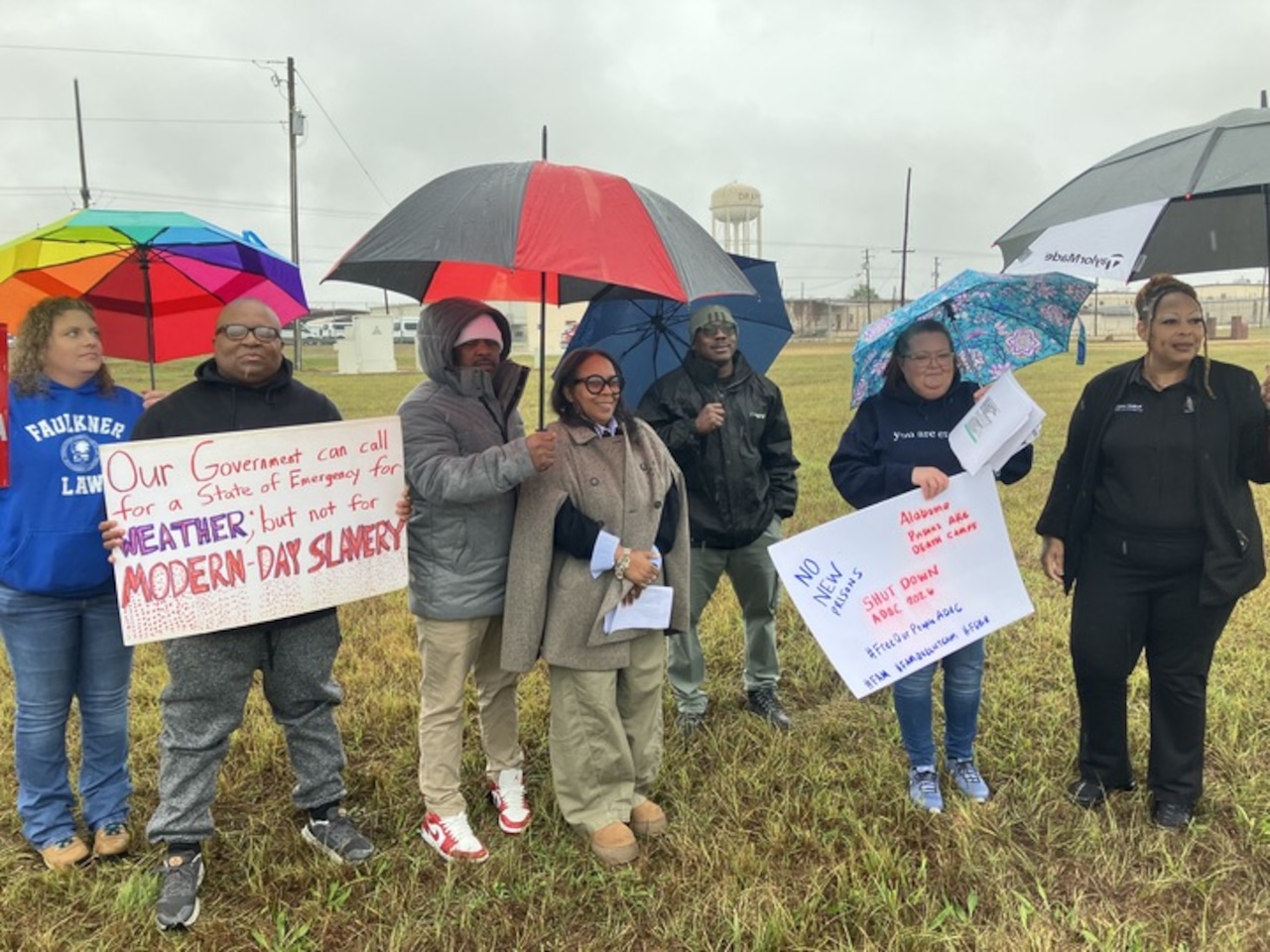
They held a press conference in a cold rain Thursday morning near the site of a new 4,000-bed prison the state is building in Elmore County.
The two-hour film, “The Alabama Solution,” takes viewers inside the state’s prisons with videos taken by inmates on contraband cell phones.
The videos show crowded dorms, men sleeping on concrete floors, and rats caught in an inmate’s water bottle.
The documentary also tells the story of a mother who struggled to find answers when her son died after a severe beating by corrections officers. The state maintained the officers acted in self-defense, but some inmates who spoke in the documentary said otherwise.
“This is now in everyone’s living room,” said Clara Brooks, who works with the Free Alabama Movement, the inmate-driven initiative highlighted in the documentary.
“Once you see it, you can’t unsee it. So the public may not have been aware of it, but now they are. So they want answers, the answers that we’ve been asking for for years.”
The advocates announced plans for a coordinated statewide inmate work strike in Alabama prisons, set to begin Feb. 8.
The plan is for inmates to stop doing assigned prison jobs, such as laundry and food service, that are critical for the system’s operations.
“This action comes in response to decades of unconstitutional sentencing practices, forced prison labor, and the ongoing humanitarian crisis” in Alabama prisons, the advocates said.
The Free Alabama Movement released a list of nine demands that included changes in sentencing laws, parole board reforms, an expansion of medical furloughs and compassionate release, the abolishment of forced prison labor, and others.
“The Alabama Solution” described a similar work shutdown organized by inmates and their advocates in 2022.
Diyawn Caldwell, founder of the advocacy group Both Sides of the Wall and an organizer of the 2022 strike, said she hopes people will demand changes.
“Just sitting home watching is not going to change anything,” Caldwell said. “And let’s be clear. The laws that are being made are not for the people that are incarcerated now. They’re for our children and our grandchildren.
“So if you don’t stand up now, you’re going to be looking at the same camera making the same pleas in the next five to 10 years if we do not do something to get up and help.
“Please come out, everybody, and support these actions and support the people that are incarcerated.”
Rachel Turner of Deatsville, a former attorney, said she followed the U.S. Department of Justice investigation into Alabama prisons that led to the DOJ’s allegations that conditions violate the Constitution.
The allegations include a failure to protect men from inmate-on-inmate violence and sexual abuse, excessive use of force by staff, and failure to maintain safe conditions. The DOJ said the prisons are rife with drugs, weapons, and suffer from poor management.
“I think a lot of people kind of heard that, and it went in one ear and right out the other ear,” Turner said.
“But now with this documentary, you see what’s actually going on. This is the sign that it’s time to make some changes. This is our cue.
“You can’t deny that the government, they’re going after the bad guys, but they’re supposed to remain good guys. But that’s not what they’re doing. They’re turning themselves into bad guys doing this.
“We have to change this. They’re human beings, and we’re treating them like they’re animals. We’re not trying to rehabilitate them. We’re just punishing them.”
