


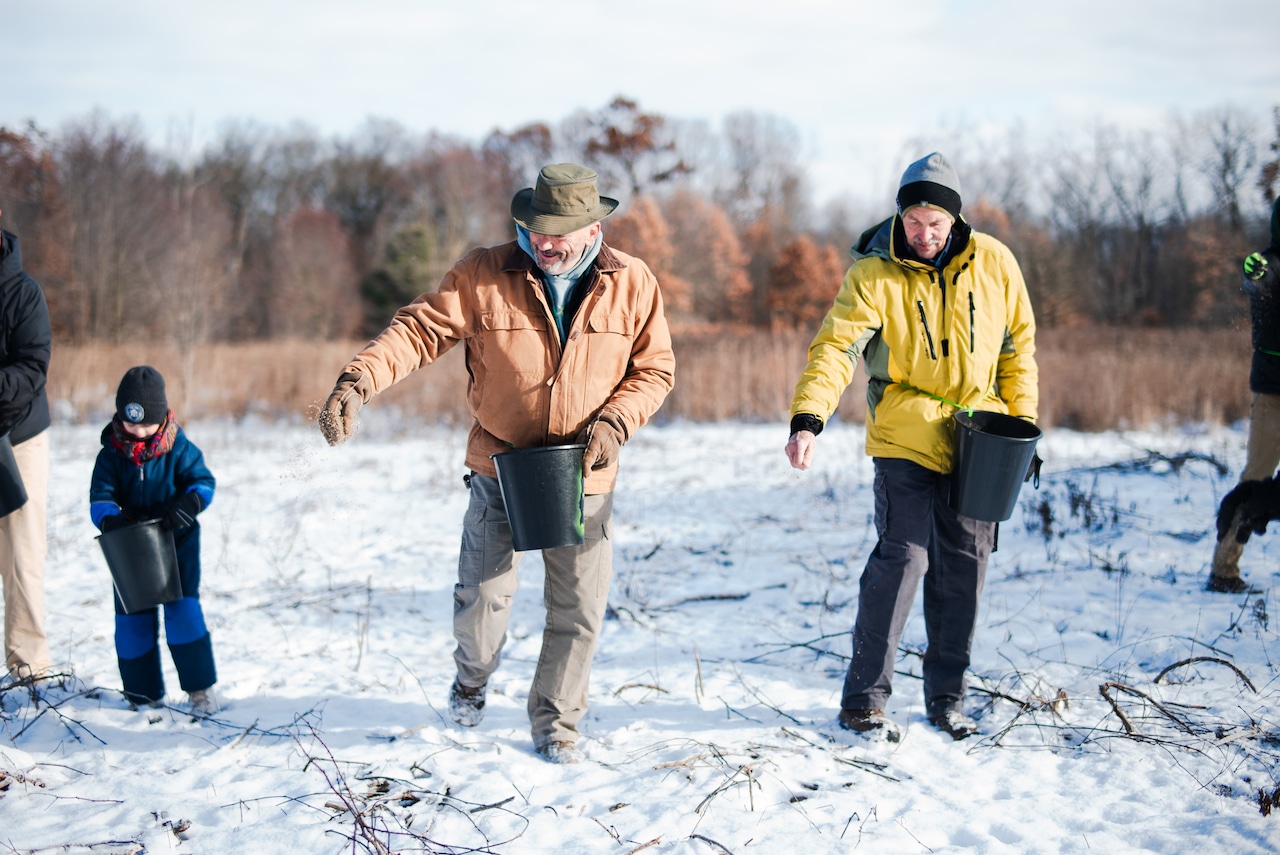

ROCKFORD, Mich. – Dozens of volunteers recently worked to complete seeding on the final acres of a major prairie restoration project at Saul Lake Bog Nature Preserve in West Michigan.
The Land Conservancy of West Michigan has worked for 25 years to restore native tallgrass prairie habitat at the property. The site initially was acquired in 1989 to protect the sensitive bog ecosystem at an old farmstead.
Over the years, the nonprofit replaced the old pastures of non-native livestock feed grass with native grasses and wildflowers.
The preserve near Rockford is known for its breathtaking displays of native sundial lupine during spring, along with a sphagnum bog, hardwood swamp and surrounding oak-hickory and beech-maple forests.
The last acres at the restored prairie were seeded on Friday, Nov. 28, by about 60 volunteers who gathered to complete the work and celebrate the project’s completion. Hundreds of volunteers have worked through the years to collect seeds, expand the prairie, and maintain the ecosystem with controlled burns, officials said.
Related: Why Michigan lights wildland fires on purpose in its rarest natural habitats
Tallgrass prairies used to be abundant in southwest Michigan but have almost entirely disappeared because of human development. Researchers found that today just 1% of Michigan’s former prairie, savannah and pine barren habitats remain.
The restored prairie at the nature preserve near Rockford now encompasses 34 acres of the 123-acre site, and the ecosystem hosts more than 150 unique plant species.
Justin Heslinga, the nonprofit organization’s conservation director, said there is more work to do to steward the restored prairie ecosystem – that planting the prairie is just the beginning.
“Now that the initial work is done, we’ll continue using periodic prescribed fire to sustain the habitat we’ve established and keep invasive species from taking hold,” he said.
Wildland fire experts conducted a controlled burn on a section of the site’s prairie acreage in April. It was part of a demonstration event to bolster public awareness about the ecological benefits of prescribed fire.
“We also may plant a few trees around the edges of the prairie, so it blends more naturally with the surrounding forest,” Heslinga said.
He said the conservancy may attempt to restore similar sites elsewhere now that they’ve learned how to re-establish and steward this “biodiverse, globally imperiled habitat.”
