


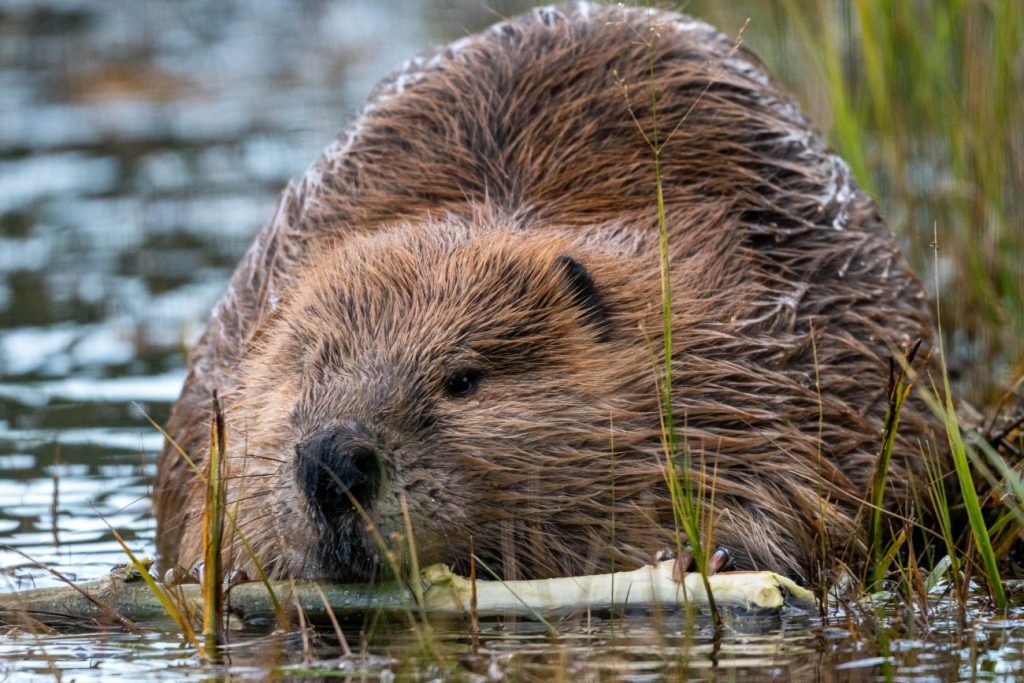

Colorado Parks and Wildlife is asking for public input through Dec. 17 after releasing its Beaver Conservation and Management Strategy.
The draft is available for review and public input can be submitted at engagecpw.org/beaver-conservation-and-management-strategy . CPW staff will consider all input received in order to inform the final version of the strategy.
According to a press release, the aim of the Beaver Strategy is to increase and sustain both beaver populations and beaver-influenced wetlands in suitable habitats across the state.
“Today, a major wildlife conservation movement is emerging to prioritize the ecosystem benefits from this species and increase occupation in appropriate habitats,” the release states. “As Colorado’s wildlife management agency, CPW has managed beavers for decades, and staff, stakeholders, and the public have increasingly called for a more proactive and coordinated approach.”
According to the release, beavers occupy a broad range across North America that includes Colorado, and the wetlands they help establish support healthy stream systems and ecosystems in addition to a wide variety of wildlife species that rely on them. Since European settlement in North America, the draft confirms that beaver populations have been greatly reduced. The Pitkin County Healthy Rivers website adds that ecologists suggest current beaver numbers are 2-20% of what they were historically.
“The reduction of beaver and beaver wetlands on the landscape has resulted in losses of ecological function in Colorado’s watersheds, with negative ramifications for our people and ecosystems,” the draft states.
According to the draft, where beavers had been restored in formerly occupied watersheds that contain adequate habitat, “Watershed health has improved, increasing resilience to droughts, floods, and wildfire, and wetland habitat condition and biodiversity has increased.”
Pitkin County Healthy Rivers considers beavers “one of the most effective partners we have in restoring stream health, improving water quality, and building climate resilience,” according to its website. To learn more about the benefits of beavers, visit pitkincountyrivers.com/beavers.html .
“What benefits would the Roaring Fork Watershed see if beavers were supported and allowed to reestablish? And then what’s a first step?” said Lisa Tasker of the Pitkin County Healthy Rivers Program. “This led to outreach to the (White River National Forest) and subsequently $100,000 being put towards the effort in 2023 and 2024.”
While CPW currently does not have a statewide or regional population goal or estimate as part of this management plan, according to Rachael Gonzales, CPW public information officer, in January 2025 the U.S. Forest Service presented results of beaver inventory in Pitkin County compiled from data collected during the 2023 and 2024 summers. Technicians with the U.S. Forest Service covered roughly 353,000 acres of land throughout the headwaters of the Roaring Fork River and its tributaries and surveyed 296 randomly chosen sites on 66 streams for beavers, their dams, and lodges.
The surveys discovered that 17% of the sites were currently occupied by beaver, 34% of the sites had some signs of beaver, and 37% of sites had evidence of past beaver occupation.
According to Tasker, three areas on the forest stood out and have become priority for restoration activities: Fourmile, Thompson Creek, and Chapman.
The Healthy Rivers staff and board chair participated in the initial stakeholder process led by CPW to inform the writing of the current beaver draft.
CPW’s draft provides a framework emphasizing “greater leadership, coordination, and resources to support beaver conservation and management on key topics,” according to the release. Those topics include population and habitat status and monitoring, beaver harvest management, beaver restoration opportunities, living with beaver and nonlethal conflict resolution, and translocation policy and protocol.
“The goal is to continue our focus on increasing beaver numbers and wetland acres across the state,” Gonzales told The Aspen Times.
CPW expects to release the final strategy in February 2026. The Healthy Rivers Board and staff will hold a special meeting in December before the CPW public comment deadline to look into the draft’s effectiveness and decide if and how to collectively comment.
