

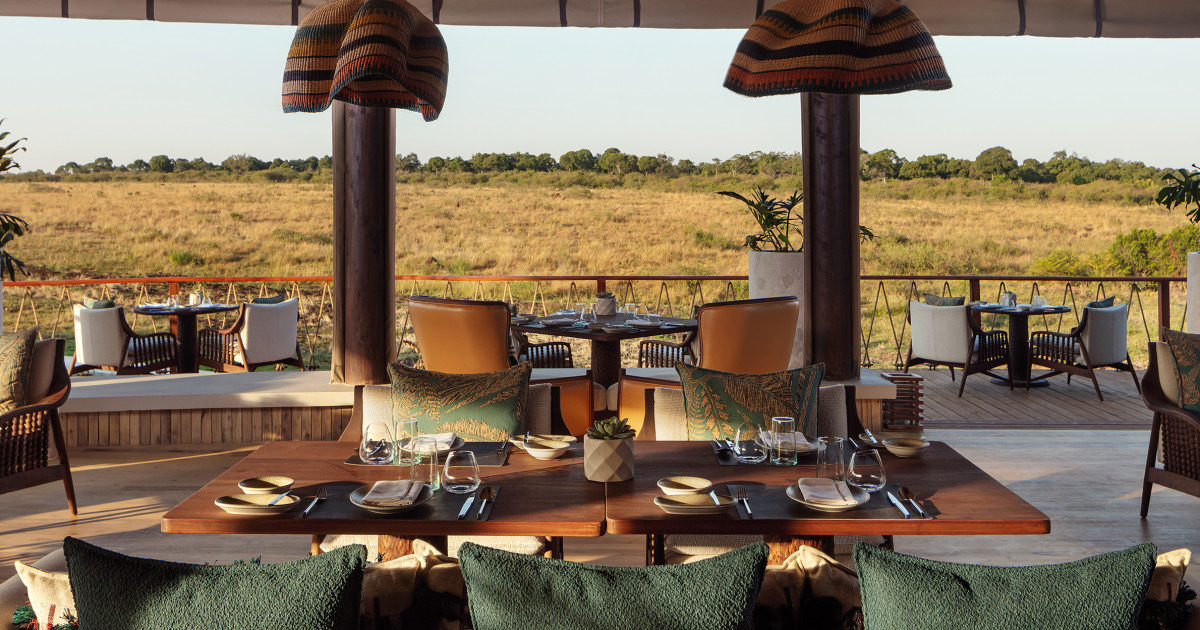

The rolling plains of Kenya’s Maasai Mara and the millions of animals that live there face a shiny new intrusion: a gleaming Ritz-Carlton safari camp.
With private plunge pools, butler service and panoramic views commanding more than $5,000 a night, the 20-hectare lodge has become a luxury lightning rod for controversy.
Leaders of the Maasai — an ethnic group of traditionally nomadic herders with ancestral ties to the area — and conservationists warn the new tourist destination threatens a migration corridor vital to the movement of vast numbers of animals and have filed a lawsuit to halt its operations.
What’s at stake, they argue, is not just a new lodge, but the accelerating pressures of tourism on wildlife, biodiversity and the very spectacle that draws these tourists in the first place.
The camp opened on Aug. 15 during the height of the Great Migration, where millions of wildebeest, zebras and other grazing animals move back and forth between the Serengeti plains in Tanzania and the Maasai Mara National Reserve (MMNR) in Kenya, a process that researchers say allows animals to find food and water and maintain genetic diversity among herds.
Tourists have long flocked to the savannah by the hundreds of thousands, hoping to witness one of the largest movements of mammals in the world, as herds cross rivers and plains teeming with predators.
But the new camp, which boasts “front-row seats to one of the world’s greatest natural wonders” on its website, may threaten the migration that visitors come to witness, conservations and Maasai leaders say.
The Ritz-Carlton camp, on a bend in the Sand River, sits on “one of the most favored corridors for these animals,” Maasai elder Meitamei Olol Dapash told NBC News in an interview Sunday.
“Any guide will tell you, that is the crossing they use,” said Dapash, who filed a lawsuit in August in a Kenyan court against Ritz-Carlton’s owner, Marriott International, the world’s largest hotel chain, as well as the project’s local owner and operator, Lazizi Mara Limited, and Kenyan authorities.
Dapash, executive director of the Institute for Maasai Education, Research and Conservation (MERC), who has a PhD in Sustainability Education from Prescott College in Arizona, alleges in the lawsuit that the 20-suite camp obstructs the crucial migration corridor and is asking the court to restore the land to its original condition.
He told NBC News in an interview there had been instances of wildebeest turning back to avoid the camp and that an elephant was seen struggling to find a path across the river after using the location for more than a decade.
“Attachment to the land and to the wildlife exists up to this very day,” Dapash said, adding that the Maasai had seen populations dwindling. The new camp, he added, “was the last straw for us, we just didn’t want to let this happen.”
The Kenya Wildlife Service government agency pushed back at claims the lodge has impacted wildebeest migration, citing monitoring data that it says shows it does not “fall within, obstruct, or interfere with any wildebeest migration corridors” and adding that migrating wildebeest “are using the entire breadth of the Kenya-Tanzania border.”
It said that
