


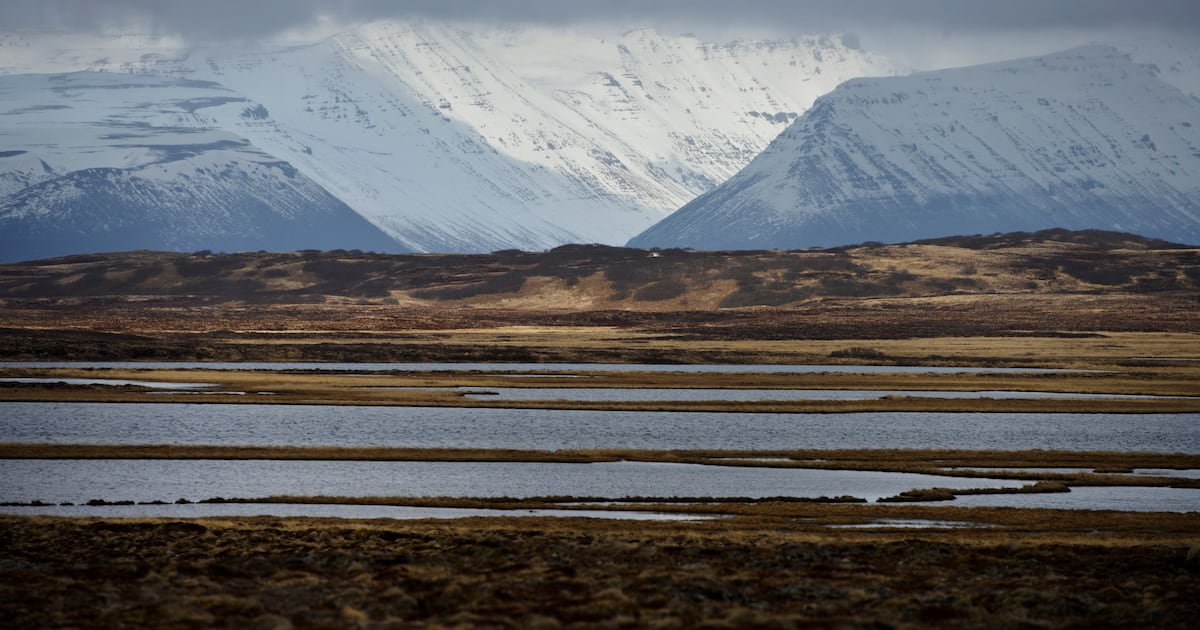

Conservation groups and three Alaska Native tribes filed lawsuits against the Trump administration on Wednesday to block a deal for a gravel road through a wildlife refuge on the Alaska Peninsula.
The Trump administration last month announced the land exchange between the federal government and the King Cove village corporation, to allow the 11-mile road through the Izembek National Wildlife Refuge.
The road has been sought for decades by King Cove residents. It would allow the village to reach an airport in Cold Bay to improve emergency medical access.
But some Alaska tribes and the conservation groups have long opposed the road, saying it would cut through a wilderness area that provides vital habitat for migrating birds hunted for subsistence, such as brant and emperor geese.
Interior Secretary Doug Burgum signed the land exchange last month, announcing it at a Washington, D.C., event that included Gov. Mike Dunleavy and members of Alaska’s all-Republican congressional delegation.
Under the exchange, the U.S. Fish and Wildlife Service would relinquish 490 acres of federal land for the road.
In exchange, the King Cove Corp. gives the federal government 1,739 acres within the boundaries of the reserve. The corporation will also relinquish its right to an additional 5,430 acres in in the reserve, though it can select the same amount of land outside the reserve.
The tribes and conservation groups argue in the newly filed lawsuits that the deal violates federal law by taking actions that will threaten the wilderness character of the refuge and endanger the waterfowl, bears and other animals in the refuge.
They’re suing Burgum and other federal officials, and the King Cove Corp. The complaints were filed in U.S. District Court in Alaska.
Chantae Kochuten, chief executive of the King Cove Corp., on Wednesday declined to provide immediate comment in response to the lawsuits.
U.S. Sen. Lisa Murkowski told reporters last month that she believes the land exchange will add to the refuge’s conservation and subsistence values, since the refuge will receive much more land than it’s giving away.
In one of the lawsuits, the tribes of Hooper Bay, Paimiut and Chevak joined the Center for Biological Diversity to argue that federal law allows protected land in Alaska to be exchanged if the deal furthers the law’s conservation and subsistence purposes.
They say the road will harm those values. They say it will also set a negative precedent for more than 100 million acres of protected lands across Alaska.
“If the Izembek road happens, it will cause a lot of chaos for Alaska Native people in my region who still live off the land and sea,” said Chief Edgar Tall Sr., of the Native Village of Hooper Bay, in a statement. “The birds we hunt may not be able to survive.”
The Defenders of Wildlife filed its own lawsuit to stop the deal, while Friends of Alaska National Wildlife Refuges and other conservation groups also filed a complaint.
The administration of President Donald Trump in 2018 had approved a land swap, but the Biden administration revoked the approval, citing legal flaws in the agreement.
The Biden administration proposed a more restrictive land swap in 2024, but did not finalize it. That land swap sharply limited commercial use of the road.
This new land exchange does not put any restriction on commercial use, though the Wilderness Act of 1964 prohibited permanent roads and commercial enterprises in wilderness areas, the Defenders of Wildlife argues in its lawsuit.
