



HOWELL, MI — Developers of a controversial “hyperscale” AI data center project that is facing fierce local opposition — reportedly backed by Facebook and Instagram owner Meta — are preparing to offer more promises in Howell Township.
An attorney representing the data center development team revealed Thursday they will offer up three new, additional promises. The data center team is hoping township officials will vote “yes” on rezoning land at a pivotal upcoming meeting Monday, Dec. 8.
A request to rezone more than 1,000 acres of mostly agricultural land is on the table. The additional promises are in response to growing public outcry over Big Tech’s push to develop AI infrastructure in Michigan at breakneck speed.
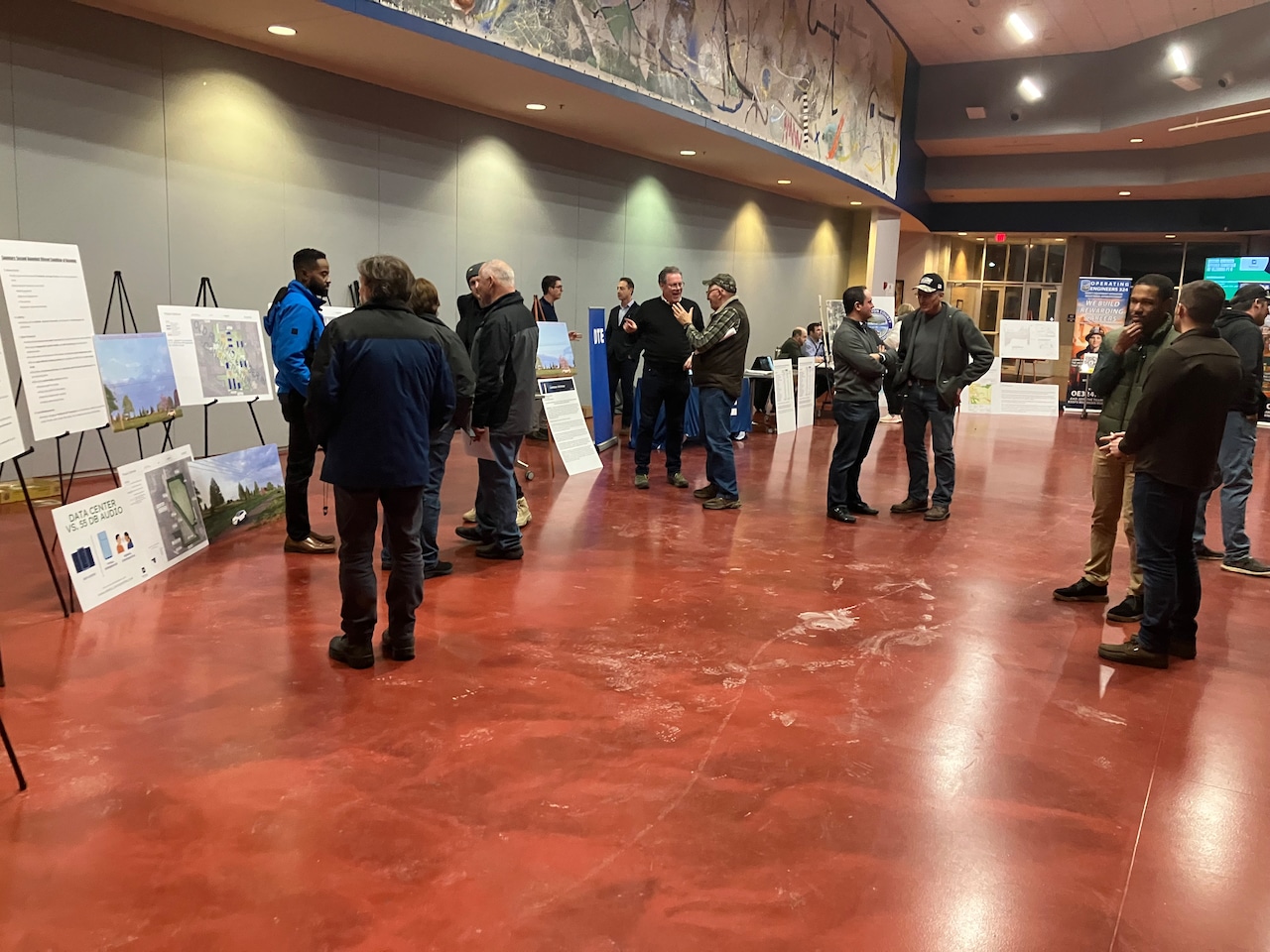
Thursday’s event at Cleary University in Howell comes on the heels of a grassroots community meeting to oppose the data center, which drew around 150 people.
“We have three new, really big conditions that are going to be submitted in writing (to the township) that will be discussed, I would imagine, at Monday’s township board meeting,” Michael Vogt, an attorney with Troy-based Dickinson Wright, told MLive.
“They’re being proposed to specifically address the concerns we’ve heard the most,” Vogt said.
The new conditions relate to water consumption, protecting property values, and funding local zoning enforcement.
Vogt discussed the data center project with a small number of residents who attended a drop-in informational event held at Cleary University Thursday, Dec. 4.
Organized by landowner Ryan Van Gilder, the event also featured representatives from DTE Energy, which would power the massive facility, a local labor union that would benefit from the creation of construction jobs, and Livingston County’s drain commission and IT department, along with some information supplied by the local water authority MHOG.
The first new promise: “We can now offer as a condition a commitment to use a closed loop, dry cooling technology,” Vogt said.
Whereas some hyperscale data centers use around a million gallons a day to cool computer servers, as an example, a closed loop system at the Howell Township data center would be supplied with about 300,000 gallons once and refilled every 10 years or so, Vogt said.
The water would be “continuously looped” instead of being constantly drawn, he said.
The second new condition the development team is offering is a “property value protection plan,” Vogt said.
If a homeowner within 1,000 feet of the property line does not want to live next to a massive data center, the data center would purchase their property at its appraised value, plus some percentage points, he said.
While they are still determining how much over the appraised value they would agree to pay to buy out a homeowner, he said it could be 1% more. That is still being determined.
If homeowners within 2,500 feet want to stay in their homes, the data center would allow them to opt in to a 10-year “appraisal program,” he said.
The data center would “cut a check” to a participating homeowner should their property value drop within the 10-year term. The payment would equal the difference between the property’s value in year one and its value when the homeowner requests compensation. As an example, if $200,000 in appraised home value is cut in half, the homeowner would receive $100,000 as compensation.
The third additional promise, Vogt said, would address residents’ concerns about the township’s ability to enforce rules.
He said the data center would put $100,000 into an escrow account. It would be there for the township to enforce local rules and all the conditions they have promised. If the data center violates code, the money would be there to cover the cost of any studies, consultants and legal fees, he said.
He said the $100,000 would be the initial investment, and if money is spent, it would be replenished.
While Howell Township officials recently voted to put a “moratorium” in place to pause for six months any consideration or approval of data center proposals, the pause does not stop the township board from voting on whether it’s appropriate to rezone the land for research and technology uses.
However, if the township board decides to approve rezoning that land, no site plans can be approved for the data center itself until the moratorium expires or is lifted. The township and Livingston County planning commissions both recommended the board deny the rezoning.
The Howell Township land in question is located north and south of Grand River Avenue. It is south of Marr Road and north of Warner Road, and east of Owosso Road and west of Fleming Road. The firm is also eyeing adjacent land in neighboring Handy Township.
The rezoning was requested by developer Randee LLC through its consulting firm Stantec Consulting Michigan.
While the developers have not publicly identified Meta, township Trustee Bob Wilson confirmed in November that Meta is backing the project.
