


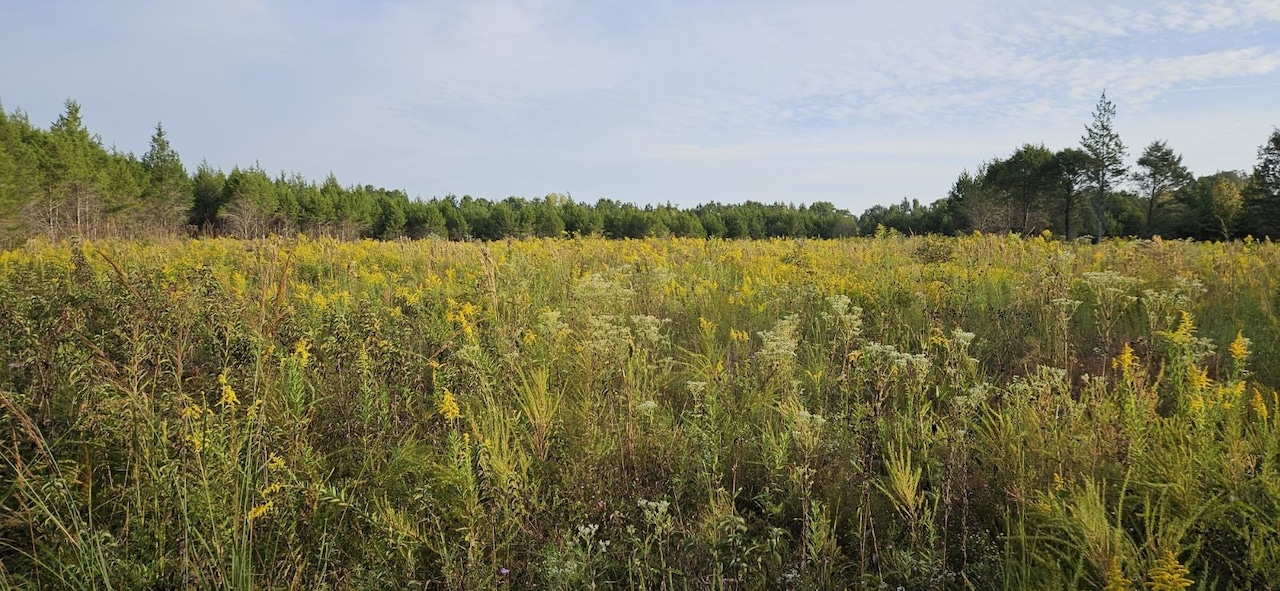

In 2018, Christopher Joe’s father urged him and his siblings to think of creative ways they could use their 200-acre farmland in Hale County, in Alabama’s Black Belt.
The wheels started turning in Joe’s mind, and he connected with eco-tourism experts and birding experts from Alabama Audubon.
“I’m playing on the farm,” Joe said. “I’m just trying to do my part.”
Today, The Joe Farm is a destination for birdwatchers all over the country, and one of the standout locations for the “Black Belt Birding Festival,” where birders can see Mississippi kites diving for insects.
Joe, a conservationist with the National Resources Conversation Service, was able to draw so many birds—and later so many tourists—by implementing practices that encouraged the native prairie habitat to flourish.
Now, a new initiative from the Alabama Soil and Water Conservation Committee hopes to give landowners in the Black Belt a chance to do the same thing, and is providing the money to do it.
In November, the committee, in partnership with the Alabama Wildlife Federation and the NRCS, launched the Alabama Black Belt Prairie Initiative, a program to provide grant money to landowners in counties to restore native prairie habitat on their property.
The committee hopes that through this program, around 8,000 acres of prairie habitat will be restored, said Ashley Henderson, assistant executive director of the committee.
“When you start changing things, then you start losing species, both plant and animal,” Henderson said. “A lot of times, people want to restore the habitat, but they don’t know what to do.”
The Black Belt was once home to a patchwork of prairie land, made up of bunch grasses (grasses that grow in clumps), purple cone flowers, black-eyed susans, and other native species, Henderson said. Northern bobwhite quail, turkey, and even larger animals like bison roamed around the grasslands.
But with the arrival of European settlers, the Black Belt became home to many of the state’s plantations. The dense, rich soil for which the region is named is also very fertile and good for growing cotton and other crops.
Over time, the prairie habitat has largely disappeared from Alabama, as well as the south at large. More than 90% of the grasslands habitat in the southeastern U.S. has disappeared since European settlement, according to the Southeastern Grasslands Institute.
The loss of grasslands habitat also means a loss of the species that use that habitat. According to Scot Duncan, executive director of Alabama Audubon, prairie bird species are declining at a faster rate than any other group of bird species.
Alabama’s Black Belt is one of the poorest regions in the country. Henderson said she hopes the restoration of prairie habitat will bring economic benefits to the region as well as environmental benefits.
“We’re taking a natural resource and using it in a way that’s good for the land and the people,” Henderson said.
With the help of the Alabama State Legislature and the NRCS, there is $17.5 million in grant funding available for this initiative, Henderson said. Applications for the grants will open in March, and the program is expected to last for around five years.
Landowners can apply for money for different kinds of projects: they can ask for funds to restore habitat for the northern bobwhite quail (a key species officials are looking to target), for example, or they can ask for funds to raise cattle in a way that’s more restorative to the land.
Officials will then help connect landowners with the resources they need implement the project. Landowners can also be reimbursed up to 85% of the money they spend maintaining the project, Henderson said.
However, landowners will need to maintain their land in a way that allows native prairie to flourish, she said. Chief among that is removing invasive species, such as red cedar trees, and burning the land.
Joe’s father still raises black angus cattle on their farm. But since the family started hosting visitors on their land in 2018, he says they’ve had more than 1,000 people come to the farm, including school groups from around the state.
The Joe Farm recently received a grant to build a facility on the property with bathrooms, classrooms, and a kitchen, Joe said. The family also recently received a grant to restore 45 acres of wetland habitat on their property.
Now that the habitat has been restored, Joe says the family can just let it be, and it will maintain itself.
“If you see it, it’s been here,” Joe said. “We don’t have to do much to keep it going like this.”
